




After weeks of dialing, adjusting, and staying locked in on your crop, it all comes down to one moment: harvest. Nailing the timing is what separates a decent run from a Perfect Run.
The goal of the harvest window is to capture the plant when cannabinoid (THC) and terpene production are at their absolute highest. If you harvest too early, the resin is immature and lacks potency; harvest too late, and the cannabinoids degrade, altering the effect profile. This guide provides a technical breakdown of how to identify the perfect harvest window using visual indicators and plant physiology.
Why Harvest Timing Matters
The cannabis plant undergoes significant chemical changes during its final weeks. As the plant approaches senescence (the end of its life cycle), it focuses its remaining energy on resin production.
- Potency: Cannabinoids like THC reach their peak concentration during the final ripening stage.
- Terpenes: The aromatic compounds responsible for flavor and entourage effects are volatile; harvesting at the right time ensures they are preserved rather than evaporated or degraded.
- The "Fade": During the final weeks, typically weeks 8 and 9, the plant should naturally deplete its stored nitrogen. Removing nitrogen during this phase purples or ambers the leaf color, while the removal of chlorophyll from the flower increases trichome, terpene, and THC production.
The Finish Phase: Preparing for Harvest
Before evaluating trichomes, the plant must be properly set up for harvest during the Finish Phase, which typically occurs in weeks 8-9 of the flowering cycle. This phase is about allowing the plant to complete its life cycle naturally while preserving quality and expression.
- Introducing Fade
Transitioning to Fade in the Pro Line or Blended Line removes nitrogen from the nutrient solution. Excess nitrogen late in flower has been shown to delay senescence and negatively impact final quality. Running Fade for the final 10-14 days allows the plant to translocate stored nitrogen from its tissues, encouraging a natural finish and resulting in smoother-smoking flower. - Substrate EC and Runoff Targets
During weeks 8 and 9, increase irrigation volume to drive additional runoff and reduce salt buildup in the substrate. Substrate EC and runoff EC should closely match input EC, targeting ±1.0 EC of your input. This ensures the root zone is clean and not influencing flavor, burn, or final quality. - Environmental Stress Signals
In the finish phase, gradually lower room temperatures to 65-72°F and relative humidity to 50-60%. These conditions signal the plant that it is reaching the end of its life cycle, often triggering increased resin production as a defensive response. Cooler temperatures also help preserve volatile terpenes, which can degrade or off-gas at higher temperatures.
Trichomes: The Most Reliable Indicator
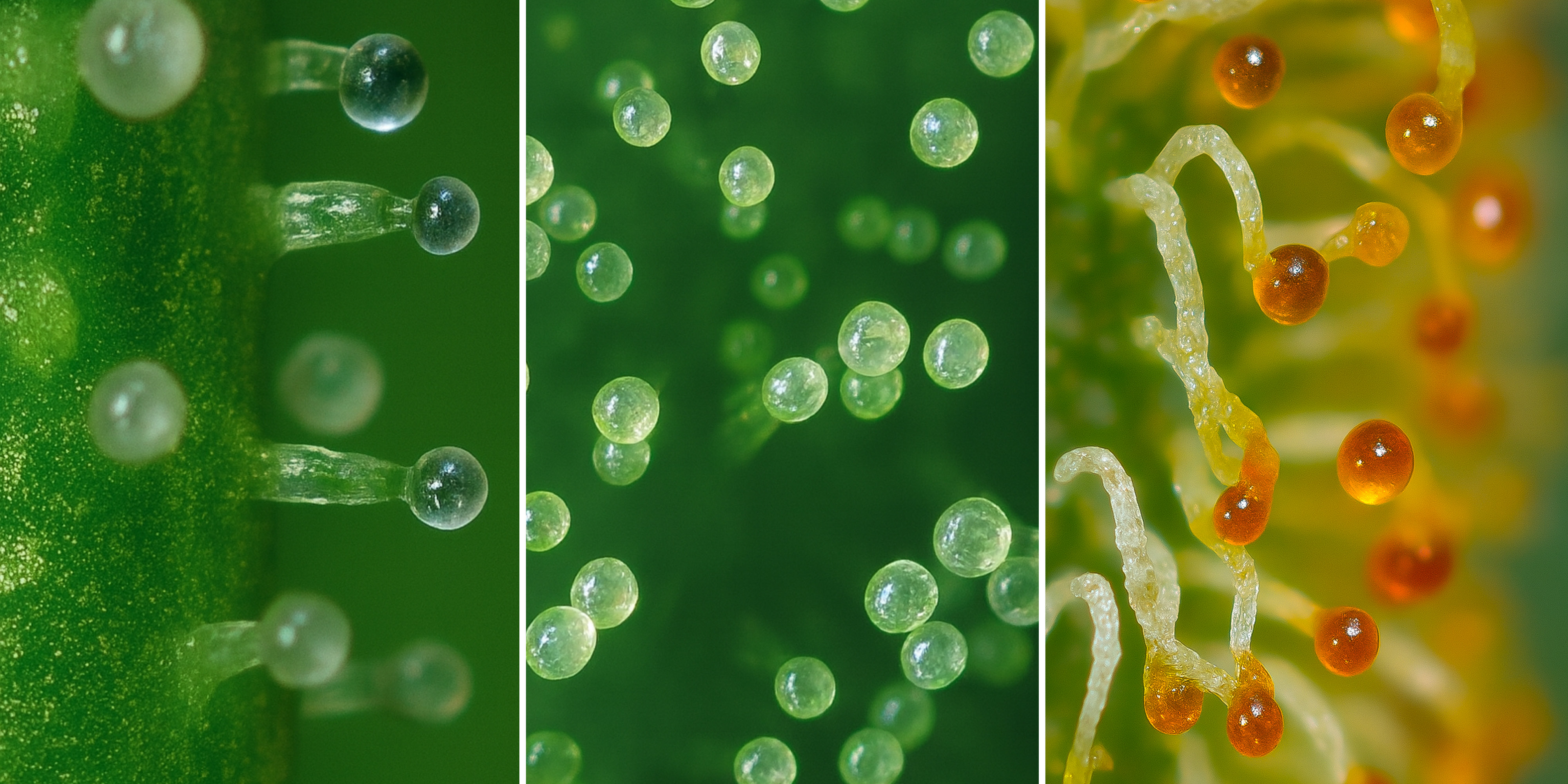
While pistils (hairs) and overall bud structure can provide helpful clues, trichomes are the only scientifically reliable indicator of harvest readiness. Trichomes are the mushroom-shaped resin glands that contain the plant’s cannabinoids and terpenes.
To inspect trichomes accurately, you will need a jeweler’s loupe (50×-60×) or a digital microscope.
Trichome development should be viewed as a spectrum rather than a strict rule set. Where you choose to harvest is ultimately a decision based on how you want the finished flower to express, including potency, effect, and overall experience.
- Clear: Immature trichomes. The plant is still producing cannabinoid precursors. Harvesting at this stage results in lower potency and a lighter, often more stimulating or “racy” effect.
- Cloudy (Milky): Peak THC production. Cannabinoids are fully developed, delivering maximum psychoactivity with a more energetic or balanced effect.
- Amber: Fully mature trichomes. THC begins converting into CBN (Cannabinol), shifting the effect toward deeper relaxation and more pronounced body effects.
There is no single “correct” harvest point. The harvest window is a tool growers can use to intentionally shape the final product. Understanding trichome progression allows you to decide whether you are targeting a more uplifting, balanced, or sedative finished flower.
Supporting Indicators
While trichomes are the primary metric, a grower should look for secondary signs of maturity:
- Pistil Maturity: The white hair-like structures (pistils) at the nodes will darken to orange or brown and curl inward as the plant matures.
- Bud Structure: The buds should look swollen and dense. During the final weeks, the calyxes often swell, packing on final weight.
- Leaf Fade: The fan leaves should begin to yellow or purple as nitrogen is depleted. This "fade" confirms the plant is using up its stored reserves.
The Harvesting Process
Once you have confirmed maturity via trichome inspection, the physical harvest begins. Efficiency and cleanliness are paramount to prevent contamination and preserve quality.
- Cut: Cut the plant stem at the base. You can remove large fan leaves (deleafing) at this stage to assist with drying, but many growers hang the whole plant to slow the drying process.
- Hang: Hang the plants upside down on a trellis or line. Ensure plants are spaced out to allow airflow and prevent mold.
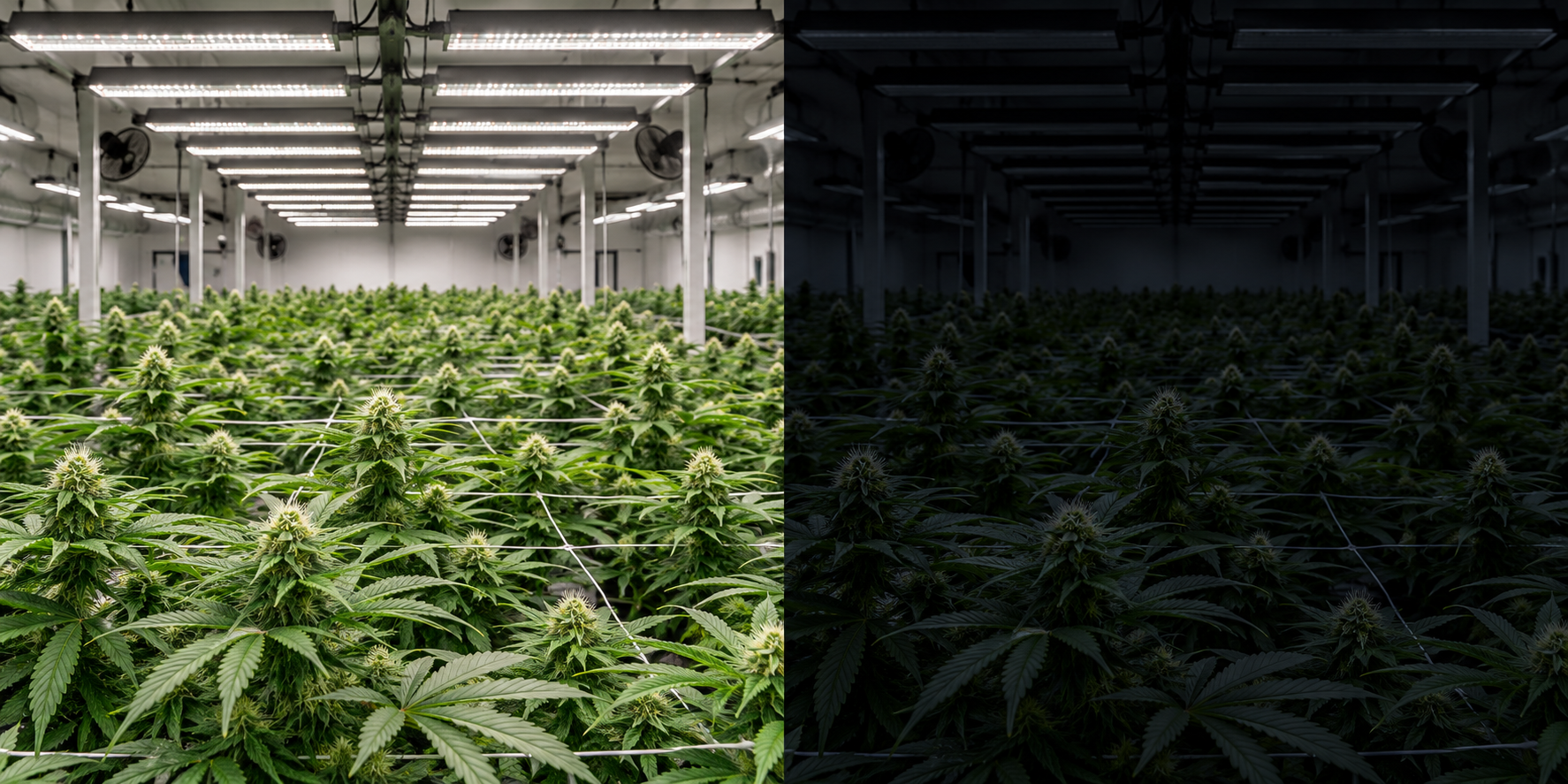
- Environment: The drying environment is critical. You must switch your light cycle to 24 hours lights off (total darkness) to preserve cannabinoids.
Ideal Drying Conditions:
- Temperature: 60°F–65°F.
- Humidity: 55–60% RH.
- Duration: Dry for approximately 12–14 days,.
Testing for Dryness
Do not rely on a calendar; rely on the tactile feel of the plant. It is important not to harvest or jar the buds too early.
- The Snap Test: If branches bend without breaking, moisture remains in the center of the stem. Keep drying.
- Ready Point: When the stems snap audibly and the buds feel dry to the touch, the plant is ready for the next stage (bucking and curing).
Warning: If you do not dry properly, excess moisture left in the middle of each bud can produce mold inside your jar or bag, ruining production and quality.
What Comes After Harvest: Why Curing Matters
Harvest and drying determine whether a crop survives without loss, but curing determines whether it reaches its full potential. Even perfectly harvested flower can lose aroma, harshness can develop, and cannabinoids can degrade if the curing process is rushed or poorly managed.
Once flowers are dried to the correct internal moisture level, curing becomes a slow, controlled phase where remaining chlorophyll breaks down, moisture equalizes throughout the bud, and terpene expression stabilizes. This step is not optional. It is the final refinement stage that transforms dried flower into a smooth, flavorful, and shelf-stable product.
In the next article, we will break down how to cure cannabis properly, including ideal moisture targets, container selection, burping strategies, and the common mistakes that undo weeks of disciplined cultivation. Harvest ends the grow, but curing defines the finished product.
Summary
Harvest timing is the final and most critical decision of a cultivation run. Properly managing the finish phase by reducing nitrogen, cleaning the root zone, and applying subtle environmental stress allows the plant to fully express its genetic potential and sets the stage for peak resin production.
Trichome inspection remains the most reliable indicator of readiness, giving growers the ability to choose a harvest window that aligns with their desired potency and effect profile. Supporting cues such as pistil maturity, bud swelling, and natural leaf fade help confirm that the plant has reached full maturity.
Careful harvesting and controlled drying protect the quality earned throughout the run. Clean cuts, proper airflow, and stable drying conditions preserve cannabinoids and terpenes, ensuring the final product reflects the intention, effort, and decisions made from start to finish.
Subscribe to our newsletter
Athena® exists to support the modern grower, no matter the scale. Our core principle is to formulate products that improve quality, reduce costs and drive consistency. Athena® was born in the grow rooms of Los Angeles, California, where we are always in pursuit of the perfect run. As the weight of being a cultivator increases, we exist to make the complex simple.
Related posts

Predatory Mites for Cannabis: Pest Targets and Practical Use

Wet Trim vs Dry Trim: Understanding Cannabis Trimming Methods
What Is Cannabis Photoperiod? A Grower's Guide to Light Cycles

