




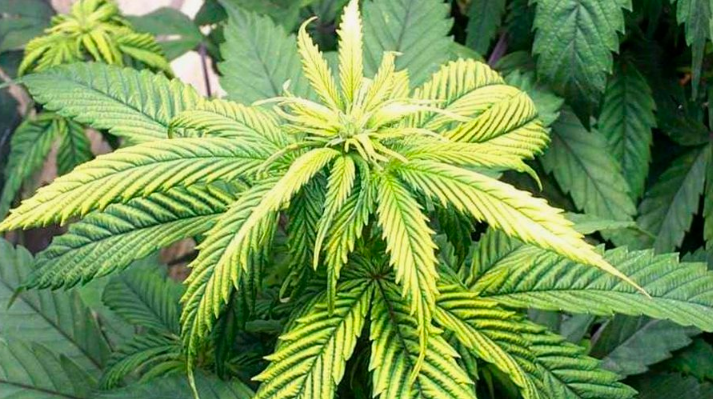
“Cal-mag deficiency” is a common grower term, but it does not describe a single deficiency. Calcium and magnesium have different functions and produce different symptom patterns. A plant may be deficient in one or both, so identifying which element is affected and why should come before choosing a correction.
Similar damage can also develop when irrigation, pH, or unhealthy roots restrict nutrient availability, absorption, or transport, even when the feed supplies enough.
The most useful starting point is to identify the pattern, review the growing conditions, and correct the cause. Adding fertilizer before doing that can make an existing imbalance harder to resolve.
What Is a Cal-Mag Deficiency in Cannabis?
The phrase “cal-mag deficiency” remains useful for search intent and general grower discussion, partly because calcium and magnesium are often sold in the same supplement. Technically, it can refer to calcium deficiency, magnesium deficiency, or combined calcium and magnesium deficiencies, each of which requires diagnosis rather than a standard treatment.
Calcium helps stabilize cell walls and membranes, supporting root development and expanding plant tissues. A continuous supply is important because calcium already deposited in mature tissue is not readily redistributed.
Magnesium forms the center of the chlorophyll molecule that captures light for photosynthesis. It also activates enzymes involved in plant metabolism. Unlike calcium, it can move from established tissue to actively growing areas.
Both must be present in usable forms. Nutrient uptake also depends on functioning roots, adequate water, and suitable growing conditions. A complete fertilizer program can supply enough while the plant still experiences a localized deficiency.
What Does a Cal-Mag Deficiency Look Like?
Early signs of calcium deficiency or magnesium deficiency may be subtle, but their patterns differ. Uneven leaf color, small areas of damaged tissue, or abnormally developing leaves can become more pronounced as the affected condition progresses.
Look beyond the damaged leaf. Is the problem affecting one plant or an entire irrigation zone? Are symptoms concentrated near a light or supply vent? Are plants otherwise growing normally, or are they drooping and drying unusually quickly?
These observations help separate a feeding problem from environmental stress, uneven irrigation, pests, or root disease. Photograph representative plants under neutral lighting and compare the same locations over time.
Calcium deficiency, magnesium deficiency, or both can develop during the vegetative stage or flowering stage. In flower, distinguish progressive damage from expected aging of lower foliage. Bud development does not eliminate the need for either element, but yellow leaves late in flower are not enough evidence to justify supplementation.
Calcium Deficiency vs. Magnesium Deficiency
Calcium: Watch Expanding Tissue
Calcium deficiency in cannabis typically draws attention to younger leaves and growing points. Possible symptoms include distorted leaf development, localized necrosis, and brown spots. Severe calcium deficiencies can disrupt developing roots and shoots.
Because calcium moves largely with water through the xylem and has limited redistribution through the phloem, delivery matters as much as supply. Research-based guidance from North Carolina State University specialists explains that restricted transpiration can limit delivery to young tissue even when fertility is adequate.
Leaf age is a useful clue, not an absolute diagnostic rule. Cultivar, conditions, and the severity of stress can change symptom expression.
Magnesium: Watch Established Foliage
Magnesium deficiency commonly appears on older leaves first. Yellow tissue between veins that remain greener is called interveinal chlorosis. With advanced damage, affected areas may become necrotic.
The plant can relocate this mobile element to support younger tissues, leaving established foliage with less. University of Minnesota Extension describes this mobility and symptom pattern across crops.
Nitrogen deficiency more often causes broadly uniform yellowing of lower foliage. Potassium deficiency frequently involves yellowing and damage along leaf margins, while iron deficiency can produce interveinal chlorosis on young leaves. These patterns help narrow the possibilities, but symptoms overlap. Testing may be needed to distinguish magnesium deficiencies from other cannabis deficiencies.
What Causes Calcium and Magnesium Deficiencies in Cannabis?
An actual supply deficiency in either element can result from an incomplete feed program, incorrect dilution, a missing fertilizer component, or switching water sources without reviewing the recipe. Check preparation records before assuming the product itself is inadequate.
RO water has most dissolved minerals removed by reverse osmosis. Very soft water may also contribute little calcium or magnesium. The fertilizer must cover any identified gap, but a separate additive is unnecessary when the base program already does.
Tap water may supply meaningful amounts of these elements. Hardness, alkalinity, and EC describe different aspects of water quality; none alone gives a complete elemental analysis. Test the source rather than assuming all hard water is useful or all soft water is unsuitable.
Root stress creates another route to deficiency. Waterlogged media, excessive dryback, damaged roots, and accumulated salts can restrict absorption. Nutrient antagonism also matters: excessive potassium can interfere with magnesium nutrition.
Nutrient solution pH outside the appropriate target or fluctuating substantially can affect availability and root function. Root-zone pH can also shift when the substrate remains too wet or dries too aggressively, even when input pH is within the target range. Low transpiration can restrict calcium delivery, while excessive drying demand can overwhelm a plant’s water supply. Increasing feed strength does not correct either problem.
How Coco Coir Affects Calcium and Magnesium Availability
Coco coir contains exchange sites that hold and release positively charged ions. This means the composition of the solution around roots can differ from what was originally mixed.
Raw-material quality and processing matter. Poorly prepared material may carry unwanted salts and have an exchange balance that affects calcium and magnesium availability. Washing removes soluble salts; buffering conditions exchange sites. Those processes serve different purposes.
Once planted, manage irrigation, drainage, pH, and feed composition together. “Lockout” is a broad description of restricted availability or absorption, not a diagnosis. If roots are stressed or salts are accumulating, extra fertilizer may increase EC without resolving the apparent deficiency.
How to Correct a Suspected Calcium or Magnesium Deficiency
Work through the system in a consistent order to identify whether calcium, magnesium, or both are affected. This keeps each correction connected to evidence and makes the response easier to interpret.
- Inspect the pattern. Compare new growth with mature foliage. Check leaf undersides for pests and note whether discoloration is between veins, along margins, or scattered across the leaf.
- Review recent changes. Look at water source, fertilizer components, mixing order, dilution, irrigation timing, and environmental settings. Confirm that concentrates were prepared correctly and that every required component reached the plants.
- Measure pH and EC. Calibrate meters and compare the final feed with a suitable substrate test. Athena recommends an input pH of 5.8-6.2 for coco and rockwool and 6.0-6.4 for peat-based media during vegetative and flowering feed. Compare runoff pH with input pH and investigate large or persistent differences. In a healthy plant, runoff pH may be about 0.4 units above or below the input. Differences beyond that range warrant investigation of irrigation and root-zone conditions, including substrate that remains too wet or dries too aggressively. A runoff reading may reflect irrigation conditions from previous weeks, so treat runoff pH as a trend and diagnostic clue, not proof of when damage occurred.
- Assess roots and water delivery. Check drainage, moisture distribution, emitter performance, and signs of root damage. Review whether the medium remains saturated too long or dries more aggressively than intended.
- Confirm the full nutrient program. Account for the water analysis and all fertilizer inputs, then determine whether calcium, magnesium, or both are actually limited. EC indicates overall dissolved salt concentration; it cannot confirm that enough of either element is present.
Oklahoma State University Extension identifies water quality, salt concentration, pH, and nutrient balance as connected parts of hydroponic management. Use those measurements together rather than changing a recipe based on one reading.
If the cause remains uncertain or damage continues, use a laboratory for water, substrate, and tissue analysis. Follow its sampling instructions and include crop stage and symptom history. Comparing affected and healthy plants can make results more useful.
Correct the identified cause first. Restore missing feed components, address irrigation or root problems, or adjust pH as appropriate. If supply is limiting, choose a calcium source, magnesium source, or combined calcium-magnesium supplement according to the identified gap, water source, base fertilizer, growing medium, and nutrient balance.
There is no universal recovery time. Severity, root health, crop stage, and the effectiveness of the correction all influence the response. Dead tissue will not recover. Watch for healthy new growth and less additional damage rather than repeatedly increasing fertilizer because old spots remain.
Using Cal Mag Without Creating More Problems
A combined calcium-magnesium supplement makes sense only when the complete program is short of both elements or when its full formulation fits the identified limitation. If only calcium or only magnesium is deficient, adding both is not automatically appropriate. Choose a correction that addresses the verified gap and accounts for the water source, base fertilizer, growing medium, pH, root health, irrigation, and overall nutrient balance.
Excess supplementation can increase salinity, create antagonism, and contribute to toxicity or secondary deficiency. Some products also supply nitrogen or other elements. Check the guaranteed analysis and calculate the full contribution before making an adjustment.
A combined product may supply a missing element, but it will not fix damaged roots, unsuitable pH, or restricted transport. Likewise, adding calcium to an already adequate program does not guarantee delivery to the affected tissue.
Epsom salt is magnesium sulfate: it supplies magnesium and sulfur, not calcium. It can address a confirmed shortage when incorporated into a calculated feeding plan. University of Minnesota Extension cautions against routine use where no shortage exists.
Human antacid tablets such as Tums are not a suitable substitute for a formulated horticultural input. Their ingredients, dissolution, and effects on the growing medium make improvised dosing unreliable. Avoid household recipes and follow verified fertilizer directions.
Preventing Cal-Mag Deficiency Through Consistent Growing Conditions
Prevention starts with a complete program suited to the water source and medium. Check source-water quality when supplies change, keep mixing procedures consistent, and verify input pH and EC regularly. Maintain drainage and irrigation uniformity so plants receive comparable conditions. Track input and runoff pH alongside irrigation changes so large or persistent differences can be interpreted in context.
Inspect the crop throughout vegetative growth and flower. Recognizing a possible calcium or magnesium deficiency early gives the grower time to investigate before widespread damage develops. Keep records of symptoms, measurements, and corrections so recurring patterns become easier to identify.
A healthy cannabis plant needs balanced nutrition, appropriate pH, healthy roots, and stable environmental conditions. Calcium and magnesium are part of that system, but adding more is only useful when supply is the limiting factor.
Successful correction begins with identifying whether calcium, magnesium, or both are affected and why availability, absorption, or transport is limited. Make a measured adjustment and check the response. That approach supports healthy growth and helps prevent the same problem from returning.
Subscribe to our newsletter
Athena® exists to support the modern grower, no matter the scale. Our core principle is to formulate products that improve quality, reduce costs and drive consistency. Athena® was born in the grow rooms of Los Angeles, California, where we are always in pursuit of the perfect run. As the weight of being a cultivator increases, we exist to make the complex simple.
Related posts
What Is Cannabis Photoperiod? A Grower's Guide to Light Cycles
Cal-Mag Deficiency in Cannabis: How to Diagnose Calcium and Magnesium Deficiencies
What Is VPD? Understanding Vapor Pressure Deficit for Cannabis Growing

