




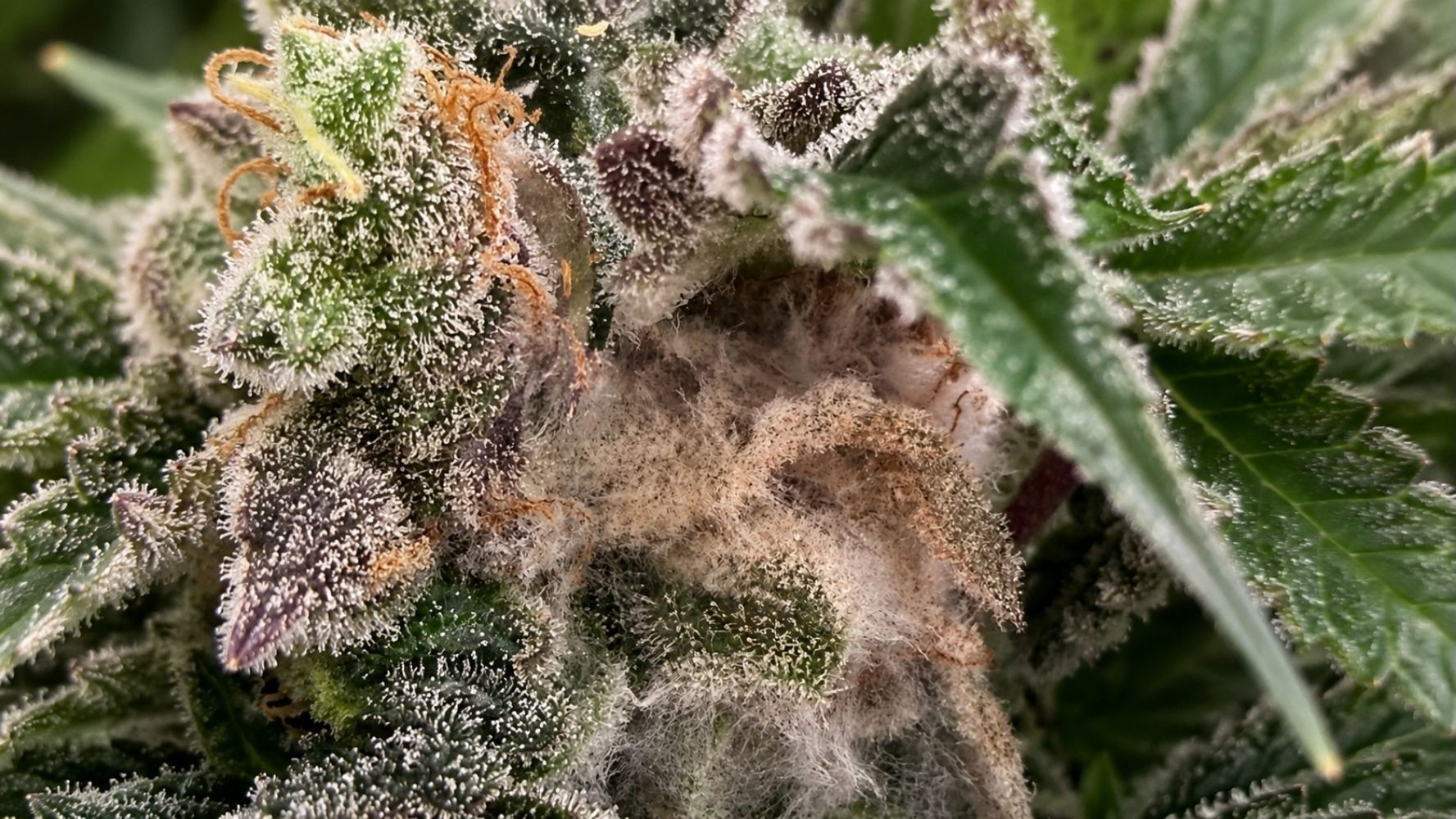
Cannabis bud rot is one of the most destructive diseases growers encounter during the flowering stage. Unlike many plant diseases that begin on the surface of leaves, bud rot often develops deep inside dense flowers where it can go unnoticed until significant damage has already occurred.
The disease is caused by Botrytis cinerea, a fungal pathogen commonly known as gray mold. Under the right environmental conditions, a single infection can spread rapidly throughout a crop, reducing yield, lowering flower quality, and creating health concerns for consumers.
Fortunately, bud rot is largely preventable. Understanding what causes it, recognizing the early warning signs, and maintaining proper environmental conditions can dramatically reduce the risk of infection.
This guide explains how cannabis bud rot develops, how to identify it early, and the most effective strategies for preventing future outbreaks.
Understanding Cannabis Bud Rot
Bud rot is a fungal disease caused by Botrytis cinerea. This fungus infects many agricultural crops, but cannabis flowers are particularly susceptible because of their dense structure and high moisture retention during late flowering.
Unlike surface molds, Botrytis usually begins inside the flower. Moisture becomes trapped between tightly packed bracts, creating an ideal environment for fungal spores to germinate. As the infection spreads outward, it destroys plant tissue from the inside before obvious symptoms appear on the exterior of the bud.
By the time visible signs develop, much of the flower may already be infected.
Because the fungus spreads through airborne spores, a single infected flower can quickly become a source of contamination for neighboring plants if environmental conditions remain favorable.
What Does Bud Rot Look Like?
Early detection is one of the most effective ways to limit crop losses, but bud rot can be difficult to identify during its earliest stages.
Common symptoms include:
- Individual sugar leaves suddenly yellowing while surrounding foliage remains healthy
- Wilted leaves protruding from otherwise healthy flowers
- Brown or tan tissue hidden inside dense buds
- Gray fuzzy mold developing as the infection progresses
- Soft, dry, or crumbly flower tissue
- A musty or damp odor
Healthy cannabis flowers remain firm and vibrant. Infected flowers often become dry, brittle, and easily fall apart when handled.
One of the most common mistakes growers make is assuming the exterior of the flower accurately reflects its condition. Because Botrytis often starts deep inside the cola, gently pulling apart suspicious buds is frequently the best way to confirm an infection.
Bud rot should also be distinguished from powdery mildew. Powdery mildew develops as a white coating on leaf surfaces, while Botrytis destroys the flower itself from the inside outward.
What Causes Cannabis Bud Rot?
Bud rot develops when fungal spores encounter an environment that remains wet long enough for infection to occur.
Several factors increase risk:
- High relative humidity
- Poor air circulation
- Dense flower structure
- Limited canopy airflow
- Extended leaf wetness from rain, condensation, or irrigation
- Large temperature swings that promote condensation
Botrytis spores are extremely common in the environment. Their presence alone does not guarantee infection.
Instead, disease develops when environmental conditions favor fungal growth.
Relative humidity above approximately 60% during late flowering significantly increases risk, particularly when moisture remains trapped inside dense flowers overnight. Limited airflow prevents these pockets of moisture from drying, giving spores sufficient time to germinate.
Indoor and outdoor growers face different challenges, but both ultimately come down to moisture management.
When Does Bud Rot Occur Most Often?
Bud rot is most commonly observed during the final weeks of flowering, when cannabis flowers have reached their greatest size and density.
Late-season environmental conditions create several risk factors:
- Larger colas retain more moisture.
- Cooler nights increase condensation.
- Plants transpire less as they mature.
- Air movement becomes more restricted within the canopy.
Outdoor growers often experience increased disease pressure following extended rain, morning dew, or prolonged periods of cloudy weather.
Indoor growers typically encounter bud rot when humidity control, airflow, or dehumidification cannot keep pace with the increasing moisture released by the crop.
Harvest timing also plays an important role. Allowing mature plants to remain in unfavorable environmental conditions for additional days can significantly increase the likelihood of infection.
How to Prevent Bud Rot
Because no treatment can restore infected flowers, prevention should always be the primary management strategy.
Successful growers focus on maintaining an environment that limits fungal development throughout flowering.
Control Humidity
Maintaining appropriate relative humidity is one of the most effective preventive measures.
Many facilities gradually reduce humidity during late flower to minimize moisture accumulation inside dense buds. A target of 40–55% relative humidity during late flowering helps reduce disease pressure while supporting healthy plant function. Sustained humidity above 60% significantly increases the risk of Botrytis development.
Using properly sized dehumidifiers becomes increasingly important as plant biomass increases.
Rather than sizing equipment for average conditions, dehumidification systems should be capable of removing the crop's peak transpiration load. As plants mature, water vapor production increases dramatically, especially immediately following irrigation and during lights-on periods.
If dehumidifiers are operating continuously yet humidity still rises during late flower or after irrigation events, the room has likely exceeded its moisture removal capacity and additional dehumidification or HVAC capacity may be required.
Improve Airflow
Good airflow helps remove humid air surrounding flowers before condensation develops.
Aim for approximately 0.3–0.5 m/s (60–100 ft/min) of air movement through the canopy during flowering. The objective is gentle, uniform airflow that continuously replaces the humid boundary layer surrounding flowers—not strong airflow directed at the buds themselves.
Multiple smaller oscillating fans often create more consistent airflow than a few large fans. Air circulation should reach every part of the canopy, including beneath benches, lower branches, corners, and other areas where stagnant air commonly develops.
As a practical rule of thumb, leaves should gently move throughout the room. If flowers are whipping in the breeze, airflow is excessive and may contribute to unnecessary mechanical stress or windburn.
Control Nighttime Humidity
Many Botrytis infections begin during the dark period.
As lights turn off, leaf temperatures decline and transpiration slows. If humidity rises overnight, condensation can develop inside dense flowers even when average daily humidity appears acceptable.
Environmental control systems should maintain consistent humidity throughout the entire 24-hour cycle—not just while lights are on. Preventing overnight humidity spikes is one of the most effective ways to reduce the likelihood of infection.
Manage Canopy Density
Dense foliage reduces airflow and traps humidity.
Strategic pruning and defoliation improve air movement while allowing flowers to dry more quickly after irrigation or natural moisture events.
Removing excessive interior growth can substantially reduce disease pressure without negatively affecting crop performance when performed appropriately.
Avoid Excess Moisture
Indoor irrigation should minimize direct contact with flowers.
Outdoor growers should monitor weather forecasts closely during late flowering and consider harvesting earlier if prolonged wet conditions are expected.
Monitor Vapor Pressure Deficit (VPD)
While relative humidity is useful for evaluating disease risk, many commercial cultivators manage their environment using vapor pressure deficit (VPD).
Maintaining an appropriate VPD throughout flowering encourages consistent transpiration while reducing prolonged moisture accumulation within dense flowers. Rather than focusing solely on humidity, growers should consider temperature, humidity, and plant transpiration together to maintain a balanced environment that supports both plant performance and disease prevention.
What Should You Do If You Find Bud Rot?
Once bud rot is discovered, the goal shifts from prevention to containment.
Unfortunately, infected flowers cannot recover.
Instead:
- Remove infected buds immediately.
- Cut several inches beyond visible symptoms.
- Carefully bag infected material to prevent spores from spreading.
- Sanitize pruning tools between plants.
- Inspect surrounding flowers carefully for additional infections.
- Reduce humidity and improve airflow immediately.
Many growers ask whether fungicides can stop an active Botrytis infection.
In flowering cannabis, fungicides are generally not considered an effective solution. Once the fungus has colonized the flower, chemical treatments cannot reverse the damage. Furthermore, fungicide applications during late flowering are often inappropriate because of residue concerns on consumable flowers.
Environmental correction and removal of infected tissue remain the most effective management practices.
Can You Smoke Cannabis with Bud Rot?
No.
Cannabis infected with Botrytis should not be smoked, vaporized, or processed into concentrates or edibles.
Although drying may remove moisture, it does not eliminate fungal contamination or the compounds produced during fungal growth.
Inhaling mold spores or fungal byproducts may present health risks, particularly for individuals with asthma, allergies, or compromised immune systems.
If there is uncertainty about whether a flower is infected, it is safest to discard it rather than attempt to salvage it.
Protecting consumer health should always take priority over recovering a small portion of the harvest.
Protecting Future Harvests
Long-term bud rot prevention begins well before flowering.
Successful growers routinely monitor:
- Relative humidity
- Temperature
- Vapor pressure deficit (VPD)
- Airflow throughout the canopy
- Nighttime humidity trends
- Canopy density
- Irrigation practices
- Plant spacing
- Environmental consistency
Facilities with well-designed HVAC systems, sufficient dehumidification capacity, and balanced airflow typically experience fewer disease outbreaks than those relying solely on corrective actions after symptoms appear.
Genetics also influence susceptibility. Some cultivars naturally produce tighter flower structures that retain moisture more easily than looser, more open flowers. While environmental management remains the most important factor, understanding cultivar-specific risk can help guide crop planning and harvest timing.
Routine crop scouting is equally important. Regularly inspecting flowers, especially large terminal colas, allows growers to identify infections before they spread throughout the room.
Key Takeaways
Cannabis bud rot is caused by the fungus Botrytis cinerea, which infects flowers under conditions of prolonged moisture and limited airflow.
Although fungal spores are common in nearly every growing environment, disease develops only when humidity, condensation, and poor air circulation allow the fungus to establish itself inside dense flowers.
Maintaining 45–55% relative humidity, providing 0.3–0.5 m/s (60–100 ft/min) of gentle canopy airflow, preventing overnight humidity spikes, and sizing dehumidification systems to handle peak transpiration loads are among the most effective strategies for reducing disease pressure.
Because bud rot begins internally, early detection requires routine crop inspection rather than relying solely on visible external symptoms.
Once flowers become infected, they cannot be recovered. Prompt removal of infected tissue, environmental corrections, and continued scouting are essential to protecting the remainder of the crop.
Continue Learning
Building healthy cannabis flowers requires more than disease prevention. Understanding irrigation strategy, environmental control, vapor pressure deficit, and root-zone management all contribute to producing resilient, high-quality crops throughout the flowering cycle.
Explore Athena's Grower Hub for additional educational resources covering cannabis cultivation, plant health, irrigation strategy, and production best practices.
Subscribe to our newsletter
Athena® exists to support the modern grower, no matter the scale. Our core principle is to formulate products that improve quality, reduce costs and drive consistency. Athena® was born in the grow rooms of Los Angeles, California, where we are always in pursuit of the perfect run. As the weight of being a cultivator increases, we exist to make the complex simple.
Related posts

Predatory Mites for Cannabis: Pest Targets and Practical Use

Wet Trim vs Dry Trim: Understanding Cannabis Trimming Methods
What Is Cannabis Photoperiod? A Grower's Guide to Light Cycles

