


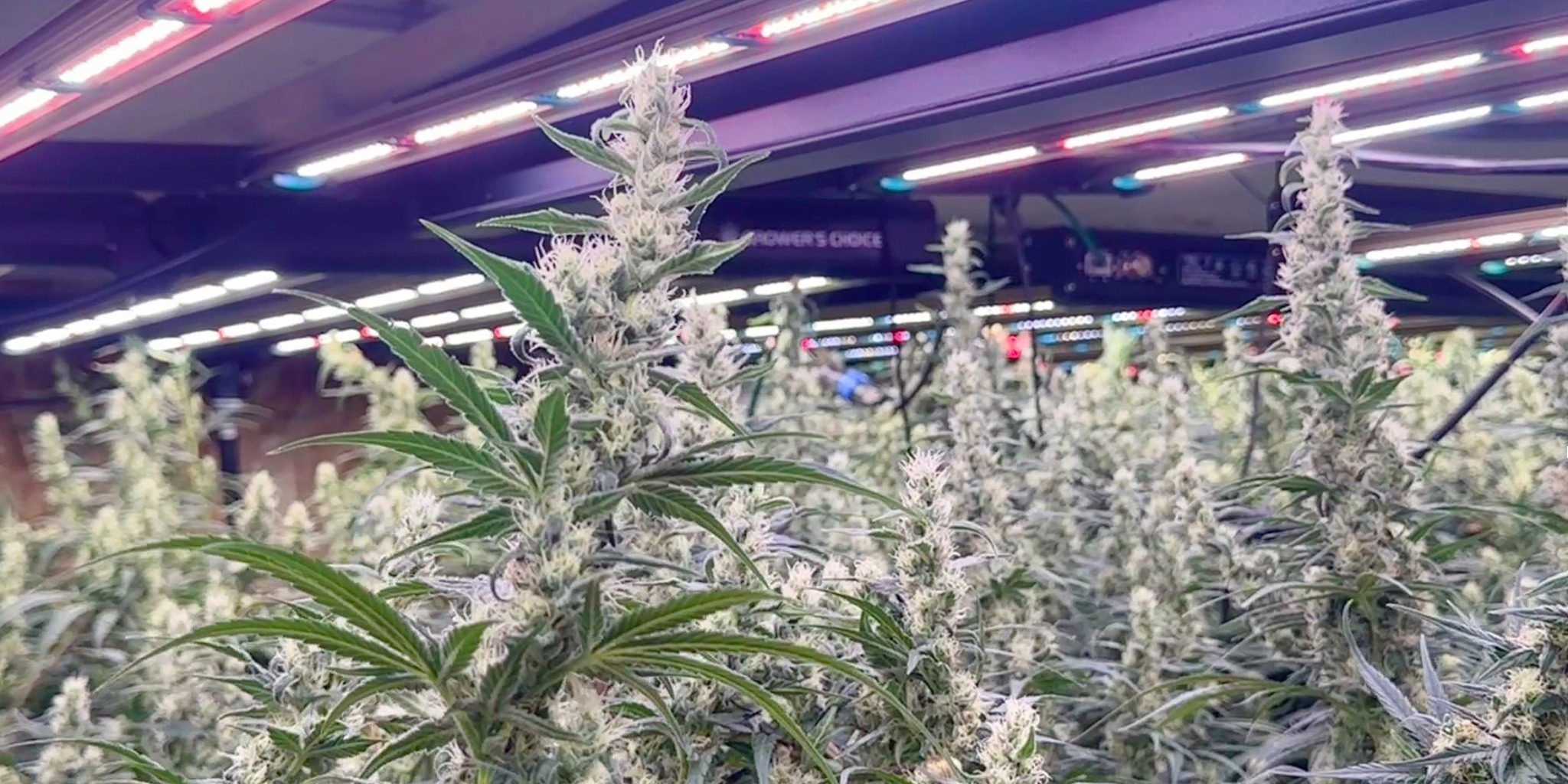
Cannabis foxtailing is one of the most misunderstood flower characteristics growers encounter. Long, narrow stacks of new calyxes forming on top of mature buds often raise concerns about genetics, excessive light intensity, or environmental stress. In reality, cannabis foxtailing is not always a sign that something is wrong.
Some cannabis strains naturally develop foxtails as part of their normal flower structure, while others produce foxtailing buds in response to stress during flowering. Understanding the difference is important because the underlying cause determines whether corrective action is necessary.
This guide explains what cannabis foxtailing is, what causes it, how to identify whether it's genetic or stress-induced, and how growers can prevent unwanted foxtailing while maximizing flower quality.
What Is Cannabis Foxtailing?
Cannabis foxtailing is a flowering growth pattern where new calyxes continue stacking vertically on top of mature flowers instead of swelling uniformly into dense buds.
Rather than forming one compact cannabis bud, the flower develops elongated calyxes, often referred to as foxtails. These structures are made up of a bunch of calyxes stacked on top of one another, creating the appearance of elongated flower towers.
Foxtailing in cannabis can occur for two very different reasons.
The first is genetics. Certain cannabis strains naturally produce foxtails as part of their normal bud formation. This is common among many sativa-dominant varieties and some modern hybrids.
The second is environmental stress. Excessive light intensity, heat stress, root stress, or other unfavorable conditions can cause mature flowers to continue producing new growth late into flowering.
Understanding whether cannabis foxtails are caused by genetics or environmental conditions is the first step toward determining whether any changes are needed.
What Causes Foxtailing in Cannabis Plants?
Several factors can contribute to cannabis foxtailing. While genetics are often responsible, environmental conditions frequently play a significant role in stress-induced foxtailing.
Genetics
Some strains of cannabis naturally produce elongated flowers throughout bloom.
In these cultivars, foxtailing is simply part of the plant's genetic growth pattern. The flowers may appear less dense than traditional indica varieties but often maintain excellent resin production, trichome coverage, and potency.
Genetic foxtailing typically develops uniformly across the entire plant and remains consistent from harvest to harvest.
Light Stress
One of the most common causes of stress-induced foxtailing is excessive light intensity.
Modern LED grow lights are capable of producing extremely high PPFD levels. When fixtures are hung too close to the canopy or coverage areas overlap, upper flowers may receive more light than they can efficiently utilize.
Instead of completing normal flower development, buds continue producing new calyxes, creating elongated foxtails.
Symptoms commonly include:
- Foxtails developing only on upper colas
- New white pistils appearing late into flower
- Bleached flower tops
- Yellow sugar leaves closest to the fixture
Maintaining appropriate hanging heights and measuring PPFD rather than estimating light intensity can significantly reduce light stress.
Heat Stress
Heat often accompanies excessive light intensity.
When canopy temperatures rise above optimal levels, flowers may continue elongating instead of maturing normally. Heat stress can also reduce flower density and slow resin development.
Proper HVAC performance, air circulation, and environmental monitoring help minimize heat-related foxtailing.
Root Stress and Environmental Stress
Healthy flowers depend on healthy roots.
Overwatering, underwatering, unstable irrigation, nutrient imbalance, or rapid fluctuations in root-zone pH can all contribute to plant stress. Likewise, poor airflow, high humidity, or rapidly changing environmental conditions inside a grow room or greenhouse may increase stress during flowering.
Rather than one single cause, stress-induced foxtailing is often the result of several environmental factors occurring simultaneously.
How to Identify Foxtailing Buds
Foxtailing buds have a distinctive appearance once growers know what to look for.
Unlike normal bud structure, where flowers swell evenly around the stem, foxtailed buds continue producing vertical stacks of new calyxes that form spires extending beyond the original flower.
Common characteristics include:
- Elongated flower towers
- New white pistils continuing to emerge near harvest time
- A bunch of calyxes stacked on top of one another
- Irregular bud structure
- Less dense upper flowers
If the foxtailing is caused by stress, growers may also notice:
- Yellow or bleached flower tips
- Leaf curling near the canopy
- Foxtails limited to upper colas
- Uneven flower maturity
It is important to remember that foxtailing is not always bad.
If the entire plant displays consistent foxtails without additional signs of stress, genetics are the most likely explanation.
Is Cannabis Foxtailing Bad?
Not necessarily.
Whether cannabis foxtailing is beneficial, neutral, or problematic depends entirely on what caused it.
Genetic Foxtailing
Genetic foxtailing is largely cosmetic.
These flowers often develop excellent trichome coverage, high THC concentrations, and desirable terpene profiles despite their unusual appearance. Some growers even prefer the unique look of naturally foxtailed buds.
Because the flower develops this way by design, no corrective action is usually necessary.
Stress-Induced Foxtailing
Environmental foxtailing tells a different story.
When caused by heat or light stress, continued flower growth may reduce bud density, create uneven maturation, and potentially reduce overall flower quality.
That does not necessarily mean potency will suffer. If trichomes continue developing normally and harvest occurs at the proper time, THC levels may remain largely unaffected.
Rather than judging flowers solely by appearance, growers should evaluate resin production, trichome maturity, aroma, and overall plant health before deciding whether foxtailing has negatively impacted the crop.
How to Prevent Foxtailing Cannabis
While genetic foxtailing may not be able to be prevented, stress-induced foxtailing can often be minimized through proper environmental management. Exact targets may vary by cultivar and growth stage, so use plant response and leaf-surface measurements to guide adjustments.
Optimize Light Intensity
Excessive PPFD is one of the most common causes of stress-induced foxtailing in indoor cultivation.
During flowering, a canopy-level PPFD of approximately 700-1,000 µmol/m²/s is appropriate for many cannabis cultivars grown without supplemental CO₂. Higher intensities may be used in optimized, CO₂-enriched environments, but light should be increased gradually and monitored closely.
Measure PPFD across the entire canopy, adjust fixture height or output as plants grow, and correct any localized hot spots. If foxtailing appears primarily on flowers directly beneath the fixtures, excessive light or radiant heat is a likely cause.
Avoid assuming that more light always produces better flowers.
Manage Temperature
Maintain stable canopy and leaf-surface temperatures throughout flowering. A general target is:
- Daytime canopy temperature: 75-82°F (24-28°C)
- Nighttime temperature: 68-75°F (20-24°C)
- Day-to-night temperature swing: Ideally no more than 5-10°F (3-6°C)
Prolonged canopy temperatures above approximately 84-86°F (29-30°C) can increase stress and the likelihood of foxtailing, particularly under high light intensity.
Use an infrared thermometer or thermal camera to check flower and leaf-surface temperatures rather than relying only on the room thermostat. Consistent air movement also helps prevent localized hot spots beneath LED fixtures.
Maintain a Stable Root-Zone pH
Rapid pH fluctuations in the root zone can stress plants by disrupting nutrient availability and uptake. For soilless cultivation, maintain a root-zone pH of approximately 5.6-6.2, with 5.8-6.0 serving as a common irrigation target.
Monitor irrigation and runoff pH regularly, but avoid making aggressive corrections based on a single reading. Sudden changes in pH can create additional stress. Instead, identify the cause of the fluctuation and make gradual adjustments while maintaining consistent irrigation timing, substrate moisture and nutrient concentration.
Reduce Environmental Stress
Avoid large or sudden fluctuations in:
- Temperature
- Relative humidity
- Irrigation timing
- Root-zone EC
- Substrate moisture
- Vapor pressure deficit (VPD)
During flowering, maintain approximately 45-60% relative humidity and a VPD of roughly 1.2-1.5 kPa, depending on plant maturity and canopy temperature. Conditions should generally become slightly drier during late flowering to reduce disease pressure.
Make environmental changes gradually whenever possible. Stable growing conditions generally produce more consistent flower development and higher-quality cannabis.
When to Harvest Foxtailing Cannabis
One of the most common questions growers ask is whether foxtailed buds should remain on the plant longer.
In most cases, harvest timing should be based on trichome maturity, not the presence of foxtails.
Monitor the original flower rather than the newest foxtail growth.
When most trichomes on the primary bud are cloudy with a small percentage turning amber, the plant has generally reached its ideal harvest window.
Waiting for every new white pistil on the foxtails to mature can unnecessarily delay harvest and may reduce overall flower quality.
Some growers notice a second internode bloom or fresh lower bud growth late in flower. This new growth does not necessarily mean the entire plant requires additional flowering time.
After harvest, foxtails can be trimmed if desired, but they are perfectly safe to dry, cure, and consume alongside the rest of the flower.
Can Foxtailing Be Reversed?
Once a flower has developed a foxtailed structure, it cannot return to its original shape.
However, new growth may normalize if the underlying environmental stress is corrected early enough.
If excessive light intensity is responsible, adjusting fixture height or reducing PPFD may prevent additional foxtailing.
Likewise, improving environmental control by reducing heat, stabilizing humidity, correcting irrigation practices, or relieving root stress may limit further abnormal flower development.
The goal is not to reverse existing foxtails but to prevent additional stress throughout the remainder of flowering.
Key Takeaways for Growers
Cannabis foxtailing is a flowering growth pattern where new calyxes continue stacking vertically on mature flowers, creating elongated bud structures commonly referred to as foxtails.
Not all foxtailing is a problem. Many cannabis strains naturally produce foxtails as part of their genetic expression, while stress-induced foxtailing is typically caused by excessive light intensity, heat stress, root stress, or other environmental challenges.
Accurate diagnosis begins by determining whether foxtailing is genetic or caused by stress. Genetic foxtailing is generally cosmetic and does not negatively impact flower quality. Stress-induced foxtailing often signals that environmental conditions should be evaluated and corrected.
When harvesting foxtailed cannabis, rely on trichome maturity rather than bud shape. Flowers should be harvested when the primary buds have reached the desired level of trichome development, even if fresh foxtail growth continues to produce new pistils.
By maintaining stable environmental conditions, appropriate light intensity, healthy root systems, and balanced cultivation practices, growers can consistently produce dense, high-quality cannabis flowers while minimizing unwanted stress-induced foxtailing.
Continue Learning
Producing exceptional cannabis flowers requires more than selecting the right genetics. Environmental control, lighting strategy, irrigation management, and healthy root-zone conditions all play a role in flower development. Explore Athena Grower's Hub to learn more about optimizing your cultivation environment for healthier plants and more consistent harvests.
Subscribe to our newsletter
Athena® exists to support the modern grower, no matter the scale. Our core principle is to formulate products that improve quality, reduce costs and drive consistency. Athena® was born in the grow rooms of Los Angeles, California, where we are always in pursuit of the perfect run. As the weight of being a cultivator increases, we exist to make the complex simple.
Related posts
What Is Cannabis Photoperiod? A Grower's Guide to Light Cycles
Cal-Mag Deficiency in Cannabis: How to Diagnose Calcium and Magnesium Deficiencies
What Is VPD? Understanding Vapor Pressure Deficit for Cannabis Growing

