




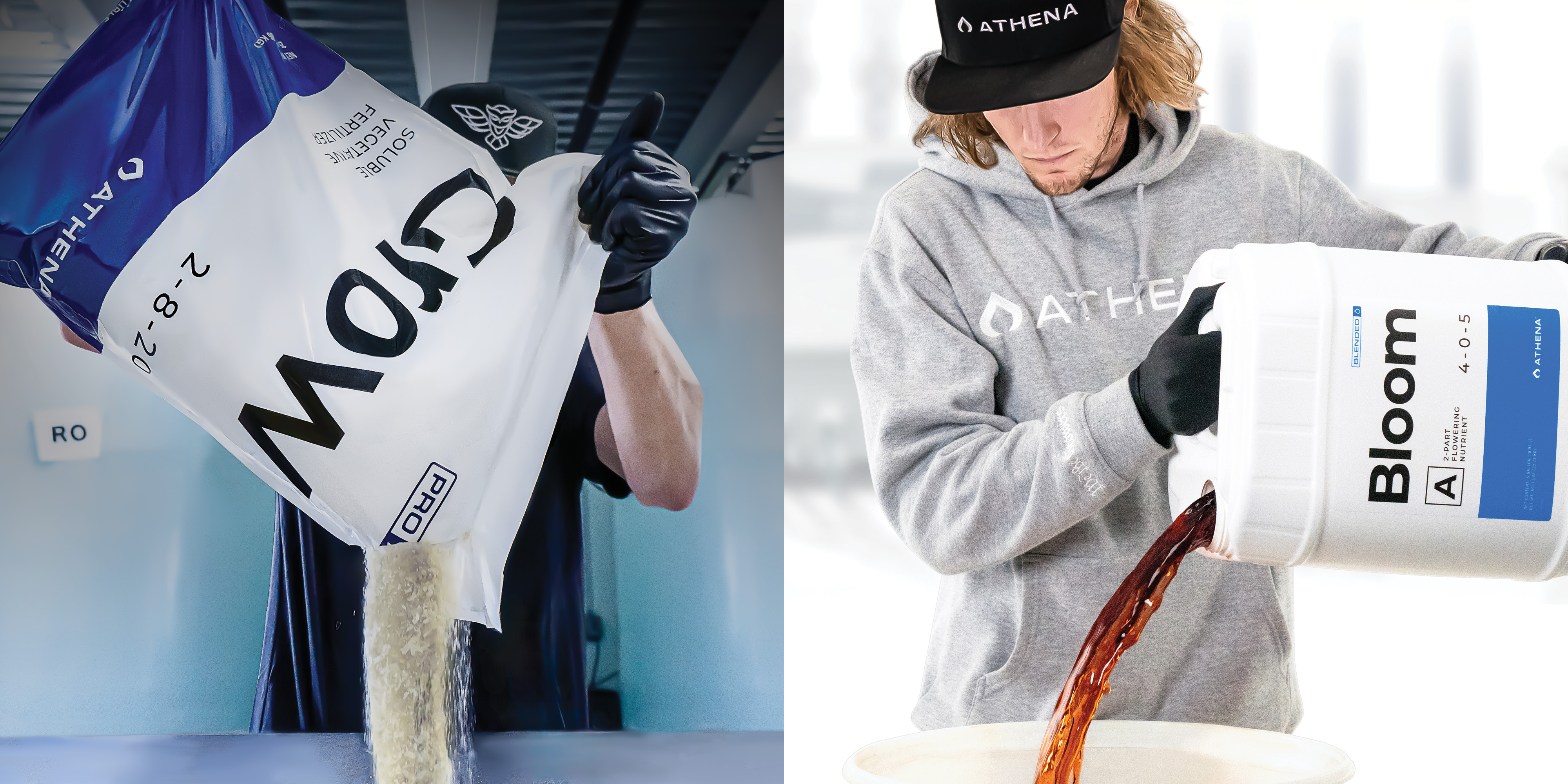
Understanding Nutrients in a Hydroponic Cannabis System
Hydroponic cannabis cultivation gives growers direct control over one of the most important drivers of plant performance: nutrition. By removing soil from the equation, hydroponic systems deliver essential plant nutrients directly through water, allowing growers to precisely manage the elements required for plant growth.
In these systems, cannabis roots are exposed to a nutrient solution that contains all of the macro, secondary, and micronutrients required for development. Because nutrients are delivered in dissolved form, they are immediately available for plant uptake. This direct delivery allows hydroponic systems to support rapid plant growth, efficient nutrient absorption, and high cannabis yields when nutrient concentrations are properly balanced.
Hydroponic cultivation also allows growers to precisely manage nutrient strength using electrical conductivity (EC), which measures the concentration of dissolved nutrients in the solution. By monitoring and adjusting EC levels, growers can match nutrient supply to the plant’s developmental stage and environmental conditions.
Unlike soil systems, where nutrient availability can fluctuate depending on microbial activity and organic matter breakdown, hydroponic systems rely on carefully balanced nutrient solutions to maintain consistent root zone conditions. This level of control allows growers to optimize plant performance throughout vegetative growth, flowering, and final maturation.
This guide explains how hydroponic nutrients function in cannabis cultivation, how balanced nutrient solutions are built, and how growers can adjust nutrient programs to support healthy plants, stable root zones, and high-quality cannabis harvests.
The Role of Base Nutrients and Micronutrients
Most hydroponic nutrient systems are built around base nutrients that provide the majority of essential plant nutrients required for cannabis cultivation.
These formulations contain macronutrients, secondary nutrients, and micronutrients in ratios designed to support both vegetative growth and flower development.
The three primary macronutrients are nitrogen, phosphorus, and potassium.
Nitrogen plays a critical role in vegetative growth by supporting:
- chlorophyll production
- leaf expansion
- rapid canopy development
Phosphorus supports plant energy transfer and reproductive development through:
- root development
- ATP production and cellular energy
- flower formation
Potassium contributes to plant performance by regulating:
- water balance in plant tissues
- enzyme activation
- carbohydrate metabolism
Secondary nutrients are also essential for healthy plant growth. Calcium supports structural integrity within plant cells and helps maintain strong root development. Magnesium forms the center of the chlorophyll molecule and enables photosynthesis.
Micronutrients such as iron, manganese, zinc, copper, boron, and molybdenum are required in smaller quantities but remain critical for enzyme activation and plant metabolism. Many hydroponic fertilizers use chelated micronutrients to keep these elements soluble and available to the plant.
Building the Right Nutrient Solution
Creating a balanced nutrient solution is one of the most important aspects of hydroponic cannabis cultivation. The nutrient program must supply all of the elements required for plant growth while also remaining chemically stable within the batch tank.
If nutrients become unstable and fall out of solution, plants may receive incomplete nutrition and irrigation equipment can become clogged by mineral deposits. Maintaining stability in the nutrient solution ensures plants receive consistent nutrient concentrations throughout the irrigation cycle.
Many fertilizers available to growers were originally designed for other crops, which may not have the same nutrient demands as cannabis. For this reason, it is important to choose a nutrient program developed specifically for cannabis cultivation. Nutrient lines such as Athena Blended Line or Pro Line are formulated to match the nutrient uptake patterns and growth stages of cannabis.
Most hydroponic fertilizers are provided as multi-part systems that separate incompatible ingredients until they are diluted in water. This prevents chemical reactions such as calcium combining with phosphate or sulfate compounds to form insoluble precipitates. Once diluted in the batch tank, these nutrients remain soluble and available for plant uptake.
pH management also plays an important role in maintaining nutrient stability. When batch tank pH rises too high, the likelihood of mineral precipitation increases, particularly with calcium and phosphorus compounds. These reactions can remove nutrients from solution and create deposits in irrigation equipment.
The ideal pH range for a nutrient solution can vary depending on the fertilizer formulation, source water chemistry, and irrigation system. Growers should follow the nutrient stability test provided by Athena to determine the proper pH range for their specific water source and fertigation setup. Maintaining a consistent pH within the recommended range helps reduce precipitation risks and keeps nutrients available to the plant.
Add nutrient stability test procedure QR
Source water quality also influences nutrient stability. Different water sources contain varying levels of dissolved minerals that can affect nutrient mixing and batch tank chemistry.
Common source water types include:
- Reverse osmosis (RO) water – Highly purified water with most dissolved minerals removed. This provides a clean starting point for building a nutrient solution but often requires adding calcium and magnesium through the nutrient program.
- Tap water – Municipal water supplies typically contain moderate levels of dissolved minerals and disinfectants. While often usable for hydroponics, high alkalinity or elevated calcium levels may require adjustments to nutrient mixing or batch tank management.
- Well water – Groundwater can contain higher concentrations of dissolved minerals such as calcium, magnesium, iron, sodium, or bicarbonates. Elevated levels of these elements may increase the risk of precipitation or interfere with nutrient balance.
Water sources that contain high levels of specific minerals can create challenges in hydroponic systems. Excess calcium or bicarbonates can increase the likelihood of calcium phosphate precipitation. Iron or manganese may oxidize and form deposits within irrigation lines, while high sodium levels can negatively affect plant health over time.
When tap or well water contains high levels of dissolved minerals, it may be beneficial to use a reverse osmosis (RO) filtration system. RO filtration removes the majority of dissolved salts from the water, providing a clean baseline for building a nutrient solution. Starting with purified water reduces the risk of mineral precipitation and allows growers to have greater control over the final nutrient profile of the solution.
By removing excess minerals from the source water, growers can more precisely manage nutrient concentrations and maintain a more stable batch tank environment.
Proper batch tank management helps maintain a stable nutrient solution.
Best practices include:
- mixing nutrients in the correct order
- allowing each component to thoroughly mix before adding the next
- maintaining stable batch tank temperatures
- adjusting to a pH range that minimizes mineral precipitation
- remixing a fresh batch within 48 hours
Following a consistent mixing procedure helps ensure cannabis plants receive a uniform nutrient solution while reducing the risk of salt accumulation or nutrient imbalances in the root zone.
Adjusting Nutrients for Each Growth Stage
Cannabis plants require different nutrient ratios throughout their lifecycle. Adjusting nutrient concentrations as plants develop helps support healthy plant growth and high yields.
During vegetative growth, cannabis plants prioritize canopy expansion and root development. Higher nitrogen levels support rapid vegetative growth and allow the plant to build the structure required for later flower production.
As plants transition into flowering, nutrient ratios gradually shift. Nitrogen levels typically decrease slightly while phosphorus and potassium levels increase to support bud formation.
Bloom nutrient formulas often emphasize phosphorus and potassium because these nutrients support reproductive development and metabolic activity during flower production.
Matching nutrient ratios to each growth stage helps maintain consistent plant development and maximize cannabis yields.
Recognizing Nutrient Deficiencies and Lockout
Even well-managed hydroponic systems can occasionally develop nutrient imbalances.
Nutrient deficiencies occur when cannabis plants cannot absorb enough of a required element. Symptoms often appear in leaves or new growth and may include visible changes in plant structure, color, or growth rate.
Common symptoms of nutrient deficiencies include:
- Leaf discoloration or chlorosis
- Slowed plant growth
- Distorted leaf development
- Weak stems or reduced vigor
- Purpling of stems
However, symptoms that resemble nutrient deficiencies or toxicities are not always caused by an imbalance in the nutrient solution. Unfavorable environmental or root zone conditions can also disrupt nutrient uptake. Factors such as excessive dryback, overwatering or underwatering, temperature stress, excessive light intensity, or an unfavorable vapor pressure deficit can all limit nutrient transport within the plant.
When nutrient movement slows, plants may display deficiency-like symptoms even when the nutrient solution itself is properly balanced.
Monitoring plant health, batch tank conditions, and root zone and environmental parameters allows growers to identify potential issues early and determine whether symptoms are caused by nutrient imbalances or unfavorable environmental conditions before they significantly impact cannabis yields.
Organic vs Synthetic Hydroponic Nutrients
Hydroponic nutrients are typically divided into two categories: synthetic fertilizers and organic nutrients.
Synthetic hydroponic fertilizers are manufactured mineral salts that dissolve easily in water. Because they are already in ionic form, cannabis plants can absorb these nutrients immediately through the roots.
Organic nutrients come from natural sources such as plant or microbial materials. These fertilizers often rely on microorganisms to break down organic compounds into plant-available nutrients.
While organic nutrients are widely used in soil cultivation, they can be more challenging to manage in hydroponic systems. Organic materials may increase the risk of clogged irrigation lines, biological buildup, or unstable nutrient solutions.
Some growers choose to supplement synthetic fertilizer programs with organic inputs. While this approach can be effective in certain situations, it also introduces additional variables that may disrupt nutrient balance. Organic additives can alter nutrient ratios, introduce unknown nutrient concentrations, or stimulate microbial activity that changes the chemistry of the nutrient solution.
For this reason, growers who combine organic and synthetic fertilizers should monitor their systems carefully to ensure the nutrient solution remains balanced and stable.
Many hydroponic growers prefer fully mineral fertilizer programs because they provide predictable nutrient concentrations and allow for greater control over the nutrient solution.
Optimizing Hydroponic Systems for Better Yields & Quality
Environmental Conditions and Nutrient Uptake
Nutrient performance is closely tied to environmental conditions. Even a well-balanced nutrient program cannot support optimal growth if environmental conditions limit plant metabolism, transpiration, or root activity.
Environmental factors that strongly influence nutrient uptake include:
- Lighting intensity
- Temperature
- Humidity and vapor pressure deficit
- Root zone oxygen levels
- Irrigation frequency
- CO₂ levels
When environmental conditions are optimized, cannabis plants can absorb nutrients efficiently and convert them into biomass and flower production.
Transpiration, Lighting, and Nutrient Delivery
Transpiration plays a major role in nutrient movement throughout the plant. As water moves through the plant, nutrients are transported through the xylem and delivered to developing tissues. Because of this relationship, total nutrient delivery is influenced by both the volume of water the plant moves and the concentration of nutrients in the solution. Plants require a certain total amount of nutrients to maintain cellular function and support growth.
When plants move larger volumes of water through transpiration, they process more total nutrients across the day. When transpiration is reduced and plants move less water, nutrient concentration may need to be increased to ensure the plant still receives sufficient total nutrition.
Lighting choice can influence this relationship primarily through its effect on plant temperature and transpiration. High-pressure sodium (HPS) fixtures produce more radiant heat, which warms the leaf surface and increases evaporation and transpiration rates. LED fixtures produce significantly less radiant heat, so growers often run slightly higher room temperatures under LED lighting to maintain an optimal leaf surface temperature.
When leaf temperature and transpiration are maintained at similar levels between LED and HPS environments, the plant’s nutritional demand remains largely the same. In other words, it is the plant’s transpiration rate and water movement, not the lighting type itself that determines nutrient transport within the plant.
Because of this relationship, nutrient concentration should be evaluated alongside plant water use and environmental intensity rather than adjusted based on lighting alone. Growers should monitor how much water plants are actually using each day and adjust nutrient strength or irrigation strategy accordingly to maintain consistent nutrient delivery.
Nutrient Manipulation During Flower Maturation
Some growers also adjust their nutrient programs late in flower to influence plant maturation and overall crop quality. As cannabis plants approach the final stages of development, nutrient ratios can be modified to shift plant metabolism away from vegetative growth and toward flower ripening.
Reducing or completely removing nitrogen late in the crop cycle helps slow new vegetative growth and encourages the plant to direct energy toward finishing processes such as cannabinoid and terpene production. Finishing formulas such as Athena Fade are designed for this stage by removing nitrogen from the nutrient program while maintaining calcium and micronutrients that support cellular integrity during the final weeks of development.
When nitrogen is removed from the nutrient solution, the plant begins to redistribute and utilize the nitrogen already stored within its tissues. This natural redistribution allows the plant to gradually use up internal nitrogen reserves as it completes the flowering process.
Allowing the plant to metabolize its internal nitrogen stores during this stage has also been associated with improvements in final flower quality. Many growers find that reducing nitrogen late in flower can improve smokeability, resulting in a smoother final product and cleaner burn characteristics.
Strategic nutrient adjustments like these allow growers to manipulate plant physiology and influence characteristics such as flower density, terpene expression, and overall crop uniformity during harvest.
Balanced nutrient programs combined with stable environmental control allow hydroponic systems to maximize terpene expression, bud development, and overall cannabis yields.
Choosing the Best Hydroponic Nutrients for Cannabis
Growers often ask what the best hydroponic nutrients are for growing cannabis.
In practice, the best nutrient system depends on the grower’s hydroponic setup, cultivation goals, and experience level. Complete nutrient programs designed specifically for cannabis cultivation are typically formulated to support plant development throughout both vegetative growth and flowering.
Nutrient systems such as the Athena Blended Line and Pro Line provide balanced mineral nutrition designed to match the nutrient demands of cannabis plants across the entire growth cycle.
When selecting a nutrient system, growers should focus on consistency, nutrient stability, and the ability to maintain balanced nutrient concentrations in the batch tank.
A complete nutrient system that supplies all necessary nutrients and allows precise control over feeding schedules will generally produce the most reliable results.
Conclusion
Hydroponic cannabis cultivation gives growers an exceptional level of control over plant nutrition. By delivering nutrients directly through water, growers can precisely manage nutrient concentrations, batch tank stability, and feeding strategies throughout the crop cycle.
Successful nutrient management depends on more than simply mixing fertilizers. Growers must also consider water quality, nutrient stability, environmental conditions, and plant water use. Factors such as transpiration, irrigation strategy, and lighting environment all influence how nutrients move through the plant and how effectively they support growth.
Understanding how these systems interact allows growers to fine-tune their nutrient programs as plants move through vegetative growth, flower development, and final maturation. Strategic adjustments to nutrient concentrations and ratios can influence plant structure, terpene production, flower density, and overall crop quality.
When nutrient programs are combined with stable environmental control and consistent irrigation practices, hydroponic systems can produce vigorous plants, healthy root zones, and high-quality cannabis harvests with predictable and repeatable results.
Subscribe to our newsletter
Athena® exists to support the modern grower, no matter the scale. Our core principle is to formulate products that improve quality, reduce costs and drive consistency. Athena® was born in the grow rooms of Los Angeles, California, where we are always in pursuit of the perfect run. As the weight of being a cultivator increases, we exist to make the complex simple.
Related posts

What Is Cannabis Photoperiod? A Grower's Guide to Light Cycles

Cal-Mag Deficiency in Cannabis: How to Diagnose Calcium and Magnesium Deficiencies
What Is VPD? Understanding Vapor Pressure Deficit for Cannabis Growing

