




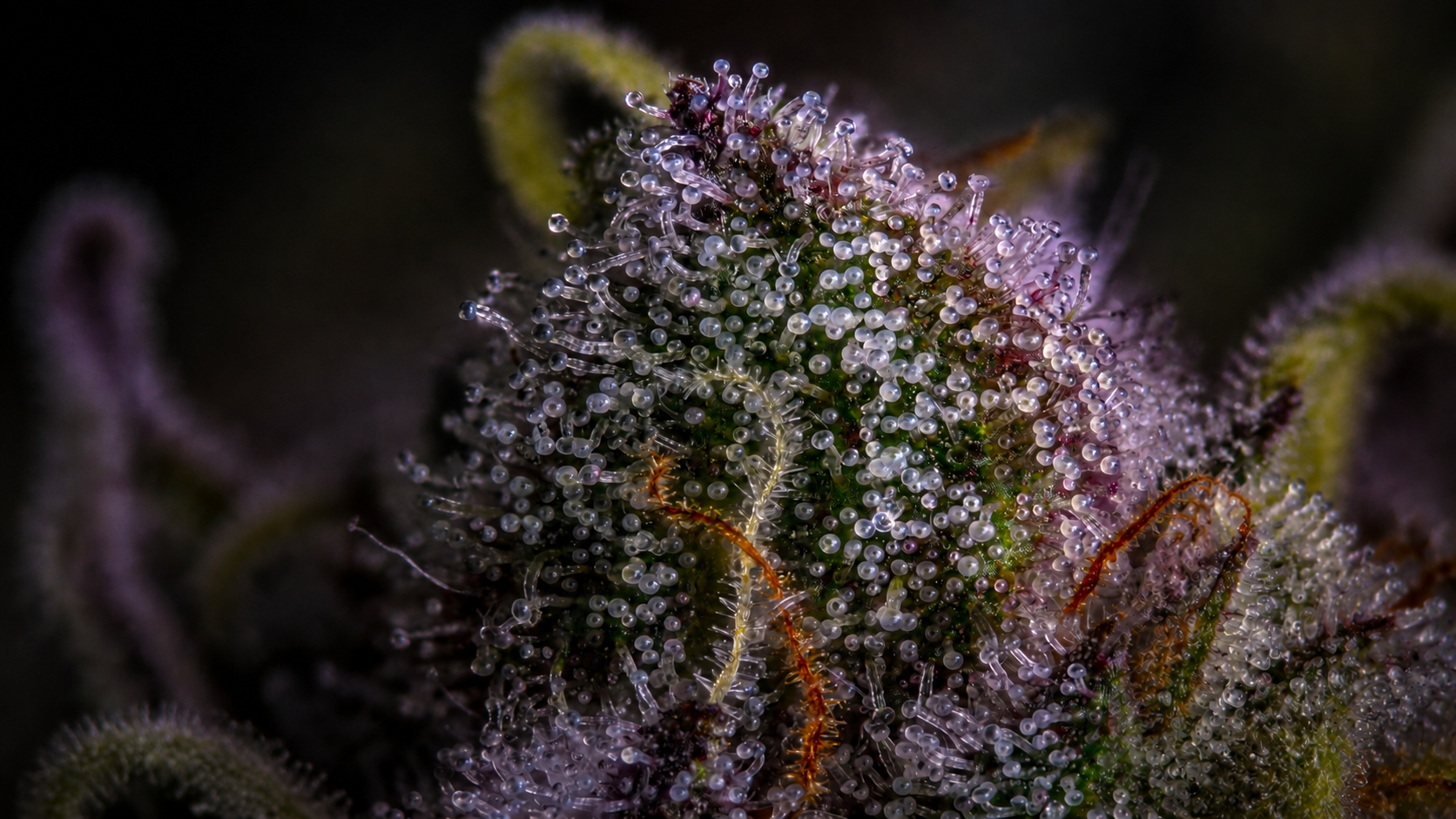
Trichomes are the tiny structures that give cannabis flowers their frosty, sticky appearance. They cover much of the plant but are especially concentrated around the bracts, sugar leaves, and flowers that make up each bud.
These structures do more than influence appearance. Glandular trichomes produce and store much of the material containing the plant’s cannabinoids and terpenes, which contribute to aroma, flavor, potency, and overall flower expression. Their development also gives growers useful information about maturity and harvest timing.
This guide explains what cannabis trichomes are, the different types found on the plant, how they develop during flowering, and how to evaluate them without relying on a single visual rule. Understanding those differences helps growers separate visual appeal from actual maturity, potency, and finished flower quality.
What Are Trichomes?
A trichome is an outgrowth of the plant’s epidermis. Many plant species produce them, and depending on the species and type, these structures may resemble fine hairs, small glands, or mushroom-shaped stalks with rounded heads.
Cannabis produces several types of surface structures. Some trichomes are large enough to create a visible layer of frost, while others are only a few micrometers wide and require magnification to examine clearly.
Trichomes also serve as part of the plant’s natural defense system. Their physical structure and chemical compounds can discourage insects and herbivores while helping buffer ultraviolet exposure and other environmental stress. In glandular trichomes, secretory cells beneath the head produce and store specialized compounds.
What Is the Role of Trichomes in Cannabis?
The role of trichomes in cannabis is both protective and chemical. Glandular trichomes act as small metabolite factories that produce cannabinoids, terpenes, flavonoids, and other secondary metabolites. These compounds accumulate inside the gland head, creating the resinous surface associated with cannabis flowers.
Cannabinoid acids such as tetrahydrocannabinolic acid (THCA) and cannabidiolic acid (CBDA) are produced within these glands. Heat converts them into THC and CBD through decarboxylation, while oxygen, light, and time can gradually degrade the finished chemistry. Terpenes contribute much of the plant’s aroma and flavor.
Heavy trichome coverage can suggest strong resin production, but appearance alone does not determine potency. Genetics, crop health, environmental conditions, maturity, post-harvest handling, and laboratory results all provide important context.
What Are the Different Types of Trichomes?
The major types of trichomes found on cannabis differ in size, structure, and function.
Bulbous trichomes are the smallest glandular type and are generally unicellular or composed of only a few cells. Capitate-sessile trichomes have a rounded gland head that sits close to the plant surface on a short base. They produce cannabinoids and terpenes but store less material than larger glands.
Capitate-stalked trichomes are the prominent mushroom-shaped structures concentrated around female flowers. Their multicellular stalk supports a larger secretory head, making them especially important for resin production and cannabinoid synthesis. These glands create much of the frosted appearance visible on mature cannabis buds.
Non-glandular trichomes do not produce resin. These pointed, hair-like structures primarily provide physical protection, which is why not every trichome on cannabis flowers and leaves contributes equally to cannabinoids or terpenes.
How Do Trichomes Develop as Cannabis Matures?
Trichome development accelerates as the cannabis plant progresses through flowering. Young gland heads often appear clear because their contents are still developing. As the flower matures, many clear trichomes become cloudy or milky as secretions accumulate. Some eventually develop amber or darker coloration as the flower ages.
This progression is useful, but it is not a universal clock. Different cultivars can produce different colors, densities, and maturation rates. Light intensity, temperature, humidity, plant health, and other environmental conditions may also influence trichome development.
Growers looking to support trichome production should focus on healthy genetics and consistent crop management. Stable lighting, nutrition, irrigation, climate, and stress management allow the plant to express its genetic potential.
What Do Trichomes Look Like When Ready to Harvest?
When inspecting a plant, evaluate trichomes on the flower bracts rather than relying only on sugar leaves, which often mature earlier. Check several flowers and multiple areas of the canopy. A jeweler’s loupe or digital microscope makes the gland heads easier to evaluate.
Clear trichomes generally indicate that the glands are still developing. Harvesting while most heads remain clear may cut the crop before peak maturity. Cloudy or milky trichomes typically indicate more mature flowers, while amber or darker heads reflect later-stage development and oxidation.
There is no universally correct percentage of amber trichomes for harvest. The preferred window depends on the cultivar, overall flower maturity, cannabinoid and terpene goals, and the characteristics desired in the finished product. Use trichome development alongside bud structure, pistil maturity, aroma, historical crop data, and laboratory testing when available.
Why Trichomes Matter for Fresh-Frozen Live Rosin
Fresh-frozen cannabis is harvested and frozen before drying or curing to preserve the trichomes and volatile compounds present on the living flower. The material is commonly washed in ice water to separate the trichome heads, which are collected, dried, and pressed into live hash rosin.
For rosin production, visible frost does not always translate into a high-performing cultivar. Trichome-head size, stalk structure, maturity, resin consistency, and how easily the heads separate during washing all influence hash yield and quality. This is why cultivars intended for fresh-frozen processing are often evaluated for “washability” in addition to cannabinoid content and flower appearance.
Solvent-free extraction can favor trichome preservation, while temperature and processing conditions strongly affect terpene retention and the finished chemical profile.
How Do Trichomes Affect Cannabis Quality?
Healthy, mature trichomes contribute directly to cannabis quality. Their resin contains the cannabinoids, terpenes, and other compounds that influence potency, aroma, flavor, and flower expression. Trichome density can be visually impressive, but final quality still depends on genetics, cultivation, harvest timing, and post-harvest practices.
Preserving these delicate glands matters after harvest. Rough handling, excessive heat, light, oxygen, and poor storage can rupture trichome heads or degrade their contents. Careful harvesting, drying, curing, and storage help protect the chemistry developed throughout the crop.
Trichomes provide valuable information, but the best decisions come from reading the whole plant. When growers evaluate trichome maturity alongside crop health and the intended finished product, they can choose a harvest window that supports more consistent, high-quality cannabis.
Subscribe to our newsletter
Athena® exists to support the modern grower, no matter the scale. Our core principle is to formulate products that improve quality, reduce costs and drive consistency. Athena® was born in the grow rooms of Los Angeles, California, where we are always in pursuit of the perfect run. As the weight of being a cultivator increases, we exist to make the complex simple.
Related posts

Predatory Mites for Cannabis: Pest Targets and Practical Use

Wet Trim vs Dry Trim: Understanding Cannabis Trimming Methods
What Is Cannabis Photoperiod? A Grower's Guide to Light Cycles

